Arts funding home

Realising the value: how practice-based organisations will fare after ACE cuts

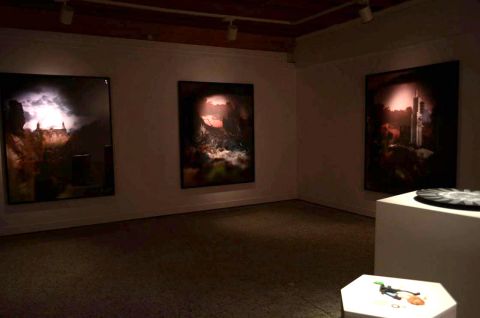
Gayle Chong Kwan, 'Installation as part of Artsway New Forest Pavilion'.  Courtesy: the artist and Alberta Pane, Paris. 54th International Art Exhibition – La Biennale Di Venezia 2011.

[enlarge]
Gayle Chong Kwan, 'Installation as part of Artsway New Forest Pavilion'. Courtesy: the artist and Alberta Pane, Paris.
54th International Art Exhibition – La Biennale Di Venezia 2011.

‘Ladders for development’ argues that the visual arts sector should pull together and support small visual arts organisations cut by Arts Council England because they "punch above their weight" and provide vital development of future artists. Six months on, Dany Louise interviews these arts organisations again, to find out how they’ve fared and what their futures hold.

Context

Following Arts Council England's (ACE) announcement of National Portfolio Organisation (NPO) awards on 30 March 2011, a-n The Artists Information Company commissioned visual arts specialist Dany Louise to research the report 'Ladders for Development: impact of Arts Council England funding cuts on practice-led organisations', published in May 2011.

The paper suggested that a disproportionate number of artists' membership and development agencies, as well as practice-based organisations, had lost core funding as a result of the NPO decisions. Highlighting the fact that 48% of NPO funding has been allocated to the 'Top 20' galleries and production agencies, it questioned whether there was greater financial room to manoeuvre than ACE had acknowledged. The paper concentrated on the role of small visual arts organisations that 'punch above their weight', recognising their impact on the continuous development of critical, high-level visual arts practice in the country and their role in developing young and emerging artists.

Focusing on the contribution to the arts ecology of fifteen practice-led visual arts organisations that are currently Regularly Funded Organisation (RFOs) but were unsuccessful in their NPO applications, the 'Ladders for Development' paper had three objectives:

1. To highlight the scope, type and number of visual arts opportunities available to artists from these former RFOs in order to indicate the nature and amount of opportunities that are at risk.

2. To make recommendations that would help safeguard this work, in particular through new commissioning relationships with the larger better-resourced NPOs.

3. To urge ACE and other arts funders to consider the arguments in the paper when shaping and developing policy, and making future funding decisions.

At the time of researching the original paper, the organisations concerned were still coming to terms with the implications of the funding decisions on their organisations. They had not at that point had the time to take stock, plan or implement actions that were appropriate for the different circumstances they are now in. 

Six months later, a-n again commissioned Dany Louise to return to those organisations - referred to here as the 'Ladders organisations' - to provide an update on how they have fared in the intervening months, to explore what the future looks like for them, and to discuss the implications for artists and the visual arts sector.

'William Hunt performing Call John the Boatman at VIVID for Endurance, 24 April 2008'

[enlarge]
'William Hunt performing Call John the Boatman at VIVID for Endurance, 24 April 2008'

Why are the Ladders organisations important?

It’s an obvious point but one worth re-stating on a regular basis that without artists, the entire arts-based superstructure of activity, discourse, institutions and market starts to break down. The infrastructure becomes diminished in importance and reach. Without artists making new work, what is the mission of arts organisations?  What would the institutions show? What does the audience experience and how? Remove artists and our institutions become museums of art heritage, rather than advocates of a living contemporary art culture that makes connections with the world we live in now.  

Institutions tend to present artists at mid-career or later stage; artists about whom there is generally a consensus of opinion. It’s a well-worn truism that institutions, as museums, operate behind the curve, not ahead of it. On the other hand, smaller arts organisations are often positioned on the curve and sometimes right at the edge of innovation.

These smaller, more flexible arts organisations are often enablers, adding value to artist production through the provision of opportunity, support, organisational skills and resource; access to networks, engagement of audiences, and a range of facilitation activities that can go unrecognised and unmeasured. Crucially, small arts organisations are a key part of the arts ecology in terms of their ability to provide the type of mentoring, experience and opportunities to early-career and emerging artists that are open access and based on merit; and in engaging the public in art with experiential life-enhancing opportunities and activities. For artists, this is professional experience that is rarely provided in universities and is difficult to gain otherwise. Small practice-based arts organisations can be described as Ladder organisations, bringing within reach those first steps or rungs of the career ladder that talented artists need to climb to develop and progress.

The various ways in which small arts organisations invest in artists are detailed in the original Ladders for Development report. But I suggest that all are based on defined artist need, and collectively, nationally, they represent a comprehensive range and variety of activity that is both stimulating and life-affirming – and which needs to be supported.

Osman Bozkurt, Didem Ozbek, 'Life in the UK / Balance of Probabilities', 2011. Installation at Castlefield Gallery, Manchester as part of Shisha's 'Asia Triennial Manchester 2011'.

[enlarge]
Osman Bozkurt, Didem Ozbek, 'Life in the UK / Balance of Probabilities', 2011.
Installation at Castlefield Gallery, Manchester as part of Shisha's 'Asia Triennial Manchester 2011'.

Current state of play

It is no exaggeration to describe the last six months as something of a long dark night of the soul for the Ladders organisations. All have faced what is essentially an existential crises, with a searching examination of not only what they do, why and how they do it; but an exploration of how much of their artistic and operational practice, if any, they can continue to deliver from April 2012 without ACE core funding. Without exception, each organisation has had to identify and examine its available options and scope out various scenarios, with the conditions requiring closure inevitably being one of the options explored. While there are grounds to be cautiously optimistic for some organisations, for example, ISIS, based in Newcastle upon Tyne, which is well embarked on actions that begin to monetarise the "intangible asset" that is its specialist knowledge of European cultural networks and funding, for other organisations, the worst case scenario - closure - has become inevitable.

The Folly Trust, the digital arts development agency based in Lancaster and with a remit to commission rural touring projects, made an early decision not to continue in such an unfavourable climate. It announced the decision to close on 11 August, after twenty-two years of operation. Its statement said that it could no longer undertake the projects it wanted to do and which engaged young people, and it closed as an organisation at the end of August 2011.

One other organisation has also taken the decision to close but not yet publicly announced. For several others, it remains the only course of action if the outcome of current and planned funding applications are unfavourable.

For the rest, this is still a critical transition period. All are resolved to continue to deliver their currently funded artistic programmes to the highest standard to 31 March 2012 when their RFO funding ends.  After this date, no firm decisions have been reached for most organisations. Each scenario is contingent of the outcome of further funding applications, development work and discussions with partners, some of which will not be known until early 2012.

This commitment to delivering current obligations - their organisational missions - while also attempting to work their way through a very specific and complex set of questions and associated actions, has considerably stretched the capacity of staff and Boards of the organisations. As an example, Shisha, the agency for South Asian visual arts and crafts, delivered its second Asian Art Triennial in October and November. This was a major eight-week festival in Manchester, and involved co-ordinating partnerships with eighteen venues, (including non-arts venues such as Manchester Cathedral and Jodrell Bank), working with forty-eight artists from seventeen different countries, and thirty-two new commissions across visual art, craft and film - a considerable effort at the best of times.

As a result, Boards have generally had to become significantly more active, meeting more regularly (every two weeks in one case) and being closely involved in thinking through the options for the organisations and with the actions taken as a result. They have needed to hold an acute awareness of their legal and moral obligations and exercise crisis leadership. The nature of actions has included taking expert advice on redundancy process and the proper disposal of assets funded by public money, as well as costing up the expenses of closure. As the Director of one organisation says: "We've needed expertise from qualified financial advisors, lawyers and accountants."

Redefining business plans and strategies

Every organisation has needed to formally rethink their structures, business plans and strategy for both the short and medium term. In several cases this has been done with the support of external consultants, financed by ACE; and in others, using internal expertise of staff and Board. Key objectives have been to cut costs, identify new methods of income generation, and potential sources of grant aid. In several organisations, where there has been less dependence on ACE revenue support, a major concern has been whether there will be an impact on the ability to lever in significant additional funding - a crucial secondary function of ACE revenue funding. 

Where possible, organisations have tried to turn this negative into a positive course that provides a tighter focus for the organisation. For example, Castlefield Gallery has identified its core strength as providing talent development support for artists and is refocusing its business plan to clearly define its offer and opportunities in this area. Director Kwong Lee points out that this "unifies the gallery programme and CPD", two major strands of activity. Pavilion, a commissioning organisation concerned with critical dialogues, interprets non NPO status as an opportunity for greater autonomy that could allow it to concentrate on its strengths in education and outreach that continues critical engagement, dialogue and discussion amongst artists outside of the university environment.

Several redundancies have already been made, and a number more are highly likely. In at least two cases, senior staff have left with other jobs to go to. It should be noted that several organisations are already so lean that there is nothing left to cut in terms of staff or overheads, and still maintain the work of the organisation. CGS for example, employs only one part-time member of staff who runs the programme, manages web and other communications with members, and does the fundraising. As detailed in the original report, most organisations already operated with a minimum of permanent PAYE staff (mostly in leadership, development and education roles) with freelancers being brought in for time limited project delivery. From the best practice point of view, it is also worth noting that the long-term use of freelancers to deliver core services and mission can be problematical in a variety of ways, and generally does not make for sustainable or resilient organisations - although there are exceptions to this rule where the use of freelancers is core to the organisation and has been structured in equitable and mutually practical ways.

Hew Locke, 'Starchitect'.  Courtesy: the artist and Hales Gallery, London. Installation as part of Artsway New Forest Pavilion at 54th International Art Exhibition - La Biennale Di Venezia 2011.

[enlarge]
Hew Locke, 'Starchitect'. Courtesy: the artist and Hales Gallery, London.
Installation as part of Artsway New Forest Pavilion at 54th International Art Exhibition - La Biennale Di Venezia 2011.

Deferred and accountable value

Many of the Ladders organisations are commissioners of new art, or invest considerably by other means in the early career development of individual artists. Significantly, as demonstrated in the 'Size Matters' report by Sarah Thelwall, (commissioned by Common Practice, a consortium of nine small London-based visual arts organisations), the financial and social benefits of early investment in an artist rarely comes back to the Ladder organisation, and current formal reporting procedures are unable to capture this "deferred value", whereby the value created by an initiating organisation is realised long after a commission has moved beyond its jurisdiction.

Thelwall notes that: "Artworks accumulate value throughout their lifetimes in both the public and private sectors, but the small organisations which originated them are not the ultimate beneficiaries of these processes...we see that value accrues over the lifetime of an object or idea which is often capitalised upon by larger institutions and the commercial sector."

One very concrete example of this is Tacita Dean's early association with Four Corners Film. Dean, a highly regarded artist working in the medium of film, currently holds the Unilever Turbine Hall commission at Tate Modern, has exhibited widely internationally and is associated with the yBa set of artists. She cites her early access to Four Corners facilities, advice and training as key to her development as an artist:

"My first cutting room was at Four Corners. There I would work, with an intensity I can recall vividly. I cannot know what I would be doing now had I not cemented my process, as I did, at Four Corners."

In 'Size Matters', Sarah Thelwall notes that "the value delivered by small organisations is often at odds with government and funders' standard measurements, which tend to rely on audience figures and diversification of funding as the main indicators of performance". Further, that "measures for audience and income development serve to de-emphasise the potential of these organisations."

Both these measures of accountability were significant factors in the assessment and decision making process of NPO applications. Although not the only measures or factors, feedback from ACE to several Ladders organisations has cited failures in both these areas as reasons for unsuccessful applications. In policy terms both these 'metrics of measurement' are worthy of debate but are outside the scope of this paper. (Although there is something of the "witch test" nature in the judgement that an organisation is too dependent on ACE funding. If it then closes due to removal of that funding, then the judgement is proved correct. If it succeeds in finding alternative means of survival, then it can be suggested that ACE funding wasn't required after all). But the limitations of this approach can be illustrated with reference to ArtSway, which appears to have suffered from a dogmatic application of ideology that has devastated an otherwise high value, well-governed and artistically ambitious organisation.

ArtSway is an artist's development, commissioning and presentation organisation in the New Forest that has been recognised as punching significantly above its weight over a period of years. It has worked in partnership with other mid-scale organisations to commission and tour new works, and its formal Artist Associates programme has successfully worked with artists who have gone on to achieve sector recognition, Simon Faithful being a notable example. Its key innovation has been the re-presentation, in three editions, of its commissioned works at the Venice Biennale during the important vernissage period. Their New Forest Pavilion has been a uniquely valuable international exhibition opportunity at one of the highest profile and prestigious art events in the world. During the 2011 edition of the Venice Biennale, Andrew Nairne, then Executive Director Arts Strategy at ACE, tweeted how much he enjoyed the New Forest Pavilion and that ways should be found for more organisations to participate in the Biennale.

ArtSway's understanding of the reason for the removal of its revenue funding has been that its location, in a village in the New Forest, did not attract enough visitors. In other words, the critical factor in the decision appears to have been quantitative and simplistic. The result of this decision has been, in the words of Chair Peter Jones, "to have to fix something that wasn't broken, and at the least it will interrupt our artistic continuity and our work with artists". Since the NPO decision, ArtSway has closed its presentation gallery in order to cut costs; has made two members of staff redundant, one of whom was the Director, and a third staff member has moved to another job. It is in the process of redefining its future direction. Chair Peter Jones is quite clear that quality of programme is still of critical importance to them, and that the Board have agreed to "keep pushing excellence and our visual philosophy". However, "we don't know if we will be able to continue with the New Forest Pavilion, which has been fantastically innovative and successful. Unfortunately, we will have to work very hard to be in a position to be able to present UK artists at the Venice vernissage in 2013." Options under consideration include a more defined focus on community engagement, running on freelance contracts and volunteers, and closer partnerships with organisations within a fifty-mile radius, including Aspex in Portsmouth, Solent University in Southampton and Arts University College Bournemouth. Closure of the organisation has been discussed and rejected unless other options have been exhausted.  Peter Jones again: "The Board considered closure to be an abrogation of our responsibility to the public purse. We have received approximately £500k investment for the studios and gallery, plus grant, which would be wasted if we shut."

'Open day showcase of camera kit, 2011 at Four Corners'

[enlarge]
'Open day showcase of camera kit, 2011 at Four Corners'

Income generation

The generally accepted 'thirds' financial model for the theatre and performing arts sector, (where income is fairly evenly split between box office and other income generation, sponsorship and grants) is on the whole unworkable for all but the biggest visual arts institutions, and even then more an ideal than a consistent reality. Free entry, an emphasis on audience numbers and engagement, the mission to develop talented artists at the beginnings of their careers and few formal shops and cafes, all mitigate against the traditional income generation opportunities available for larger presenting and performing arts organisations.

Most of the organisations are examining ways in which both their "tangible assets" and their "intangible assets" can be exploited for income. Three of the Ladders organisations own their own building, as a result of past capital support from ACE, and this can represent opportunity, albeit with some constraints. Four Corners Film, who own a five-storey building in London, intends to increase its income by running more short courses, and more hires of facilities and rooms, but is concerned to ensure that this doesn't impact unduly on its capacity to continue with its core business - that of training under-represented people in film craft and editing skills, and supporting and profiling emergent film and photographic artists.

For organisations that do not own their building, tangible assets are limited to equipment, some of which was expensive to buy but in the case of specialist new media organisations, quickly loses value in terms of resale (and needs regular updating). In any case, selling the tools of your trade is not an option for viability, but a requirement of closure.

The riches of these organisations lie mostly in their "intangible assets", their specialist knowledge and expertise, and specific professional methods, which many are now attempting to articulate and monetarise. For example, Isis, an organisation that has always linked local engagement with international input, has considerable knowledge of European cultural networks and funding, a valuable international reputation, and good contacts. UKTI has given them financial support to market this potential, and they have successfully tendered for, and won, their first European contract. Another organisation, Globe Gallery in Newcastle, described by Volunteering England as "a glowing example of volunteer management at its best", has been asked to contribute to an ACE research document on volunteering best practice.

The outlook for Contemporary Glass Society is made more positive by its robust membership base. In order to replace its lost revenue funding, CGS has taken the practical decision to increase its membership fees from £30 to £55, a rise of 83%.  This simultaneously represents a sound business decision, and a further example of the displacement of core costs from the corporate and the state, and onto the individual.

The move by an increasing number of local authorities to a strategic commissioning model, while being predicated on 'efficiency savings' and sharp reductions in budgets, does in some cases open up opportunities for some arts organisations, via their ability to tender for specific contracts available on a local basis. Castlefield Gallery is one organisation that, in refocusing its business plan around talent development and artist CPD, is actively seeking out these types of opportunities.

'Artists' Mobility Lab, Newcastle upon Tyne, May 2011'. The Artists' Mobility Lab was organised by Isis Arts in collaboration with Turning Point North East and supported by a-n. Photo: Kuba Ryniewicz

[enlarge]
'Artists' Mobility Lab, Newcastle upon Tyne, May 2011'.
The Artists' Mobility Lab was organised by Isis Arts in collaboration with Turning Point North East and supported by a-n. Photo: Kuba Ryniewicz

NPO contracts

The original paper recommended that both ACE and the new NPO organisations seriously consider how they might best utilise the very specific specialist expertise and localised relationships that exist in smaller arts organisations. In practical terms, this could mean that NPOs buy in the expertise, and where appropriate, be obliged to do so within their NPO agreements with ACE. This would have threefold benefit:

  • The larger NPOs gain more reach and deeper connection to the emerging artist ecology
  • The smaller organisations gain a source of income that recognises their specific strengths and connections.
  • Equally important, it would enable some artist professional development opportunities to be safeguarded.

The Ladders organisations were asked if this type of relationship with a larger NPO has taken place.

Pavilion, a commissioning organisation of critically-engaged new artworks and texts, with a strong education and outreach role, is finding that its reputation for high-level critical discourse is leading to opportunities. At present, they are developing a stronger partnership with the University of Leeds; and they have been requested to produce a series of discourse events at the Hepworth Gallery in Wakefield, and at Leeds Art Gallery.

ISIS is exploring collaborations with Tyne and Wear Museum, and MIMA (Middlesbrough Institure of Modern Art). One of the Directors is a member of the European Culture Network and as an organisation they have significant experience in the area of international networks, funding and artists mobility. They have been approached to share this specialist knowledge and experience by several organisations, and are further defining how to turn this specialism into income. One possibility is tendering for European contracts; they have been successful in gaining UKTI funding to develop their international marketing and have already won their first international contract, with a Swedish regional government.

ArtSway is in negotiation with two high-profile NPOs exploring the potential for practice-based curating.

While some other organisations are exploring this area, of the fourteen Ladders organisations1, these are the only ones for whom, at present, there is evidence that this is a likely scenario. This is an area to keep an eye on however, since it is premature to expect these types of relationships to be formalised at this point. The negotiations of individual NPO agreements and KPIs have only recently been concluded, and organisations are still fulfilling their obligations as RFOs, with the NPO system not truly beginning until 1 April 2012.

Ability to raise funds elsewhere

A concern of the original report was that the removal of ACE core grant would make it harder for organisations to gain support from other funders, thus provoking a downward spiral for the organisation. For this update, the Ladders organisations were asked whether they felt this was happening.

While one organisation has been in two meetings where negative statements were made about RFOs that were unsuccessful in their NPO applications, at present it is too soon to gauge the reality of the situation. Many organisations are still either awaiting the outcome of funding applications and/or have more to make before the December break, with the outcome unknown until the new year. One organisation thinks that the type of work that is being funded by trusts and foundations has changed radically, and that the call on available funds is overwhelming. This organisation has made eight-ten fundraising applications, individually and in partnership, since March 2011. Not one of them has been successful. Globe Gallery in Newcastle recognises that they will need to spend significantly more time on fundraising. Although they have always been successful in raising multiple strands of income from non-arts funds, they expect this to reduce resources going towards artistic, educational and participatory activities.

Some organisations are intending to apply to ACE Grants for the Arts (GFTA), and the outcome of these applications will be key, both in determining the future of the organisation and in the organisation's ability to use a successful outcome to lever in funding from other sources. However there is considerable pressure on GFTA since demand has been inflated by several factors: the weight of Cultural Olympiad projects, 2011-12 being the last year that RFO's can apply to it before becoming NPOs, and many of the 637 organisations that had unsuccessful NPO applications now making applications.

Generally, and re-stating what is already known, the funding outlook is extremely difficult for many small organisations, including those that will have ACE core funding for the next three years. All are under pressure to diversify their funding sources, and many will be applying to the same organisations in competition with each other.

Local authority savings have meant that arts budgets and staff resource have been significantly cut, with the likelihood of further cuts to come. The effect on arts organisations is now being seen. The abolition of the Regional Development Agencies has also had a significant effect. For example, Advantage West Midlands was the main funder of Designer Maker West Midlands. This means "a triple whammy" situation for the arts, where, it should be noted, the loss of at least two sources of funding is circumstantial rather than a reflection on the perceived quality of the arts organisation.

'Private view My East End photography competition at Four Corners, July 2010'

[enlarge]
'Private view My East End photography competition at Four Corners, July 2010'

Duty of care

It can be argued that ACE has some form of duty of care towards its disinvested organisations. At a basic level, it has had a long-term relationship with these organisations over many years; and in the case of Shisha, was instrumental in its inception and birth as part of its then policies on culturally diverse art. There is evidence that this is being acknowledged, as it continues to advise and in some cases provide short or medium term project funding. This paper highlights some additional support needs that the organisations have identified; ACE may want to consider facilitating these.

The planned deployment of ACE Strategic Funds, as published in November 2011, suggests that there may be gaps in 'strategic coverage' within the national portfolio, and therefore two types of Strategic Commissioning fund have been set aside, with further details on their deployment and criteria due to be announced in spring 2012. Given that ACE was clear in March 2011 that "some very good organisations have not been successful, and some strong applications have been turned down" (for NPO funding), it is possible - even likely - that some disinvested organisations will be successful in applying for the new strategic funds. From this perspective, a more nurturing approach may be worthwhile from ACE, in order that organisations remain viable to deliver on the wider arts agenda.

While all 206 disinvested organisations represent considerable past investment of public money over a number of years, in several cases this includes capital investment in buildings as well as programme and core costs. Of the Ladders organisations that are the subject of this report, three own their own buildings (ArtSway, Castlefield Gallery and Four Corners). Public investment is protected with charges on the buildings should they be sold (although in Four Corners' case ACE has ended their eighteen year charge); however beyond this utilitarian concern, buildings:

  • Are identified with their organisations and contribute to a very local sense of place.
  • Represent assets that have potential to provide more income - and can also eat it up.
  • Have less flexibility and more permanence than an organisation, and incur costs even if closed.

How these assets are used to their best ability by the organisations that own them should be of concern to ACE; and more so in the event of a capital asset owning organisation closing. Do the organisations have access to the very specialist business, property, financial and legal expert advice they need in this area?

Haroon Mirza, 'The Last Tape', 2010. Installed at VIVID, October 2010

[enlarge]
Haroon Mirza, 'The Last Tape', 2010.
Installed at VIVID, October 2010

Sector support

The practical difficulties of the organisations have been further compounded by a collective sense of being marginalised as organisations and a sense that their collective achievements, vision, intelligence and expertise have been institutionally devalued. Support for "the disinvested" has tended to be based on personal relationships with client artists, audiences, peer organisations and individual colleagues. This has been greatly appreciated from the organisations concerned, for whom such support has been advisory and targeted at specific issues, as well as psychologically helpful. Vivid has found artist and producer networks useful, but beyond this, its relationships with local property developers and marketing consortia have provided practical help.

Some regional Turning Point groups have been particularly supportive on an individual basis, but a national co-ordinated response has not yet taken shape. It has been noted that a visual-arts sector-wide response has been muted, with the suggestion that the NPO process has in effect been divisive. Because the announcement that an NPO application had been successful was followed by a protracted negotiation of the nature of the agreement for individual organisations, it is possible that many organisations were wary of potentially damaging their relationship with ACE during this process. Some organisations have found that the general climate of insecurity is leading to a more protective stance within the sector.

Support needs

Several organisations have been supported by ACE to employ a consultant to help with options appraisals and defining a way forward, and have generally found this helpful. Other organisations have undertaken this process internally, with expertise available on their Boards. In some cases very specific expertise has been required to inform about HR procedures, legal obligations in relation to staff and assets, and high-level financial modelling and management.

Informal support has been available via personal relationships within peer networks and organisations, and amongst client groups. Several organisations have indicated that they would also find more formal support helpful, possibly via a "conference of the disinvested", as a way of sharing:

  • Experiences of the organisational review process.
  • Knowledge and experience of different operational models and delivery formats that are being developed.
  • How to pitch for contracts as organisations and individuals.
  • Potential for alliances, collaborations and networking
  • Professional development and advice for staff who may be or have been made redundant.

Conclusion

This paper analyses the immediate situation for a small number of visual arts organisations that are due to lose their core funding in April 2012. These organisations are representative of other comparable organisations across artforms in a similar situation; and as the Size Matters paper demonstrates, also representative in important ways of small organisations that will retain their revenue funding.

It shows that the immediate future is still very unsettled for them, spanning an outlook that is at best cautiously optimistic and at worst, finite. Redundancies are already taking place with the likelihood of more to come, and the services, professional and social value these organisations offer to artists and to their local and regional communities are already being scaled back.

The implications for the visual arts sector include a lessening of opportunity for early career and emerging artists, with consequent negative effects on their career development and ability to earn a living, and increased competition for the opportunities that remain.  PVA Media Lab, for example, is a key player in the relatively small number of visual arts and media providers in Dorset; the company's development role, particularly within recent partnership projects, is not easily replaced - the region may lose expertise engendered through 15 plus years of advocacy and specialist, grass-roots support for artists by artists. In another example, Globe Gallery recognises that "a predicted change will be our ability to support individual fees to artists to the level to which we have been able in the past."

The wider implications suggest a longer-term effect on the arts ecology as a whole. As the sector contracts, the beneficial effects of the arts for individuals, for society, for tourism, regeneration and for the economy will also be sadly lessened. It's a dispiriting outlook given the sector's many achievements and the impact it has had in the last twenty years.

Notes

1 London Printworks Trust declined to participate in this update.

Bibliography

Ladders for development: how Arts Council cuts impact on small arts organisations', Dany Louise, May 2011 www.a-n.co.uk/ladders_for_development

'Size Matters: Notes towards a Better Understanding of the Value, Operation and Potential of Small Visual Arts Organisations', Sarah Thelwall, commissioned by Common Practice, London with support from Arts Council England, July 2011 www.commonpractice.org.uk/size-matters

The Ladders organisations

ArtSway, Sway, New Forest www.artsway.org.uk

Artists' residencies, commissioning, touring and presentation organisation.

  • Lost £112k per year ACE core funding.
  • Employed consultant to help identify options and make recommendations, funded by £10k from ACE.
  • Two members of staff made redundant and temporary closure of gallery as presentation venue.
  • Organisation owns the building and is considering the best options of using it for income generation.
  • In negotiation with two high-profile NPOs exploring practice-based curation.
  • Have made closer partnerships with Solent University in Southampton and Arts University College Bournemouth.
  • Exploring relocation options but aware this is a two-year process which will not solve immediate problems.
  • Researching viability of CPD for artists in the region, paid for by the artists through an annual membership scheme.
  • Fundraising for support towards Graduate Studio Scheme including CPD, bursary, training, travel allowance.
  • Looking at ways to successfully continue to commission artists.
  • Considering making a GFTA application for programme, and an application to the Catalyst fund.
  • Determined to "keep pushing excellence" and not to lose the "visual philosophy" the organisation has built up over twelve years.

Outlook: Difficult but not without optimism. A good organisation devastated by the removal of ACE revenue funding.

Castlefield Gallery, Manchester www.castlefieldgallery.co.uk

Commissioning and presentation space, artists CPD and cultural network hub

  • Lost £92k per year ACE core funding.
  • Received organisational development grant from ACE in March 2011, and employed a consultant to identify business development and income generation options over the summer. These are now being developed.
  • Working with a consultant to develop a 10 year business strategy, 3 year business plan and fundraising strategy.
  • Overall aim is to diversify income streams and become less reliant on ACE. Over-reliance on ACE funding was the reason given for unsuccessful NPO application.
  • Refocusing work towards Talent Development as a core strength and USP.
  • Developing more formalised partnerships with local authorities and HEIs in order to increase impact and have access to potential funding from these sources.
  • Will be applying to GFTA to fund a two-year programme.
  • Putting attention to tracking, evaluating and making known its impact on artists and the arts ecology.

Outlook: "We are cautiously optimistic about our future as we believe we have two great assets. We own our building which gives us low overheads and we have accumulated great knowledge of the talent development sector. The challenge for us is to keep the specialism and the knowledge asset within the organisation."

Contemporary Glass Society www.cgs.org.uk

Encouraging excellence in glass as a creative medium, supporting glass artists via projects, bursaries, mentoring, exhibition opportunities, network events, information sharing and conferences.

  • Lost £49k per year core funding.
  • Revised 2-year plan, separating core activity from project work, doing the work in-house using organisational specialist knowledge of the emerging contemporary glass world.
  • Applied to GFTA for a two-year programme of activity, "Glass Games" in 2012 and "Glass Skills" in 2013, with encouragement from ACE. Application has been successful and the programme will go ahead.
  • Raising membership subscriptions 83% in order to sustain core activities of quarterly magazine, content rich website, e-bulletins and information sharing.
  • Previously had plans for a European exhibition and networking for glass artists; now unlikely.
  • Only organisation of its kind; employs one part-time administrator.

Outlook: Difficult but determined. Membership base gives a limited source of income and successful GFTA application is encouraging.

Designer Maker West Midlands  www.designermakerWM.co.uk

Supports the development, promotion and success of new and established designer maker businesses through the provision of tailored activities, events and networking opportunities.  

  • Lost £38k amount of ACE core funding per year.
  • Undergoing options appraisal following awayday with stakeholders.
  • Still exploring how notional support from HE, LA, gallery and museum sector, peer arts organisations and client group can be translated into viable options for the organisation.
  • Has also lost funding from Advantage West Midlands, following RDA abolition.
  • Unable to cut costs since already a very lean organisation.

Outlook: Difficult. The organisation is reviewing future options.

Folly Trust, Lancaster  www.folly.co.uk (site currently off-line)
A digital arts development agency based in Lancaster, closed in August 2011.

Four Corners Film, London www.fourcornersfilm.co.uk

Established 31 years ago, it provides specialist film facilities, darkrooms, production skills and opportunities, training, gallery programme and education projects. It has demonstrable results in terms of nurturing artists who have gone of to become successful (eg. Tacita Dean and Zarina Bhimji) and can demonstrate current local market demand for its services.

  • Losing £50k ACE core funding a year, which levered in "many times that amount" and supported two part-time posts.
  • Revising 3-year business plan and income forecasts, using internal expertise.
  • Intend to apply to GFTA for pilot artists' residency programme, with encouragement from ACE.
  • Owns freehold of 5 floor building, which requires upgrading along with the facilities. Now effectively ineligible for ACE capital funding which prioritises NPOs and has made decision not to apply since probability of successful outcome is "low".
  • Can generate some additional income via short courses, room and facilities hires; but concerned that this will impact on ability to deliver core programme and services.
  • Exploring delivering an ERDF project with NPO partners and working partnerships.

Outlook: Very difficult and insecure, but organisation not immediately at risk.

Globe Gallery, Newcastle upon Tyne www.globegallery.org

Contemporary art gallery that integrates volunteering with community and schools projects, it seeks to engage people from all backgrounds with contemporary art, developing creativity, confidence and social capital.

  • Lost £44k per year ACE core funding having just relocated to new premises.
  • Submitted a GFTA application to cover the cost of installing heating, lighting and disabled access into our building and awaiting outcome.
  • Reviewed business plan and currently developing strategies to diversify income generation and long term fundraising strategies.
  • Raised £11k in an auction of donated artworks in December 2012.

Outlook: Difficult but determined. "We would like to thank our friends, the many artists, volunteers and audience members for their individual acts of generosity: the giving of time, the giving of artworks, the giving of advice, the giving of labour, the giving of kindness. We are looking forward to our collective future. Without them, we wouldn't be us."

ISIS Arts, Newcastle upon Tyne www.isisarts.org.uk

Visual and media arts organisation founded in 1991. Runs an international programme of commissions, residencies and events.

  • Lost £72,500 of ACE core funding a year.
  • Sponsored by Northern Rock to work with a consultant to identify ways forward.
  • Encouraged by ACE to apply for GFTA for organisational research and development, awaiting outcome. Will make further application for new three-year grant in 2012.
  • Will apply for ACE strategic funds.
  • Has gained UKTI funding for international export development; and been successful with LA funding for projects.
  • A Director is member of European Culture Network and organisation has considerable international experience, knowledge and contacts.
  • Refocusing income generation to monetarise this unique strength and specialism by tendering for European contracts. Organisation already gained first contract with Swedish government.
  • Has asset of "The Big M Mobile Space" which can be hired for international touring and festivals.
  • Currently shortlisting from 253 applications from 30 countries for two artist residencies; has a full programme of projects and events to deliver to July 2012.

Outlook: Difficult but cautiously optimistic.

London Printworks Trust, London www.londonprintworks.com

Declined to participate in update.

New Work Network, London www.newworknetwork.org.uk

National membership organisation supporting development of new performance, live and interdisciplinary arts practice by sharing ideas and knowledge regarding pioneering arts practices. Encouraging dialogue and activity around the sustainability, custodianship and legacy of these practices and works.

  • Lost £78k per year ACE core funding.
  • Conducted internal organisational review, recruited new board members and delivered an event to raise the profile and reposition the organisation.
  • Currently reviewing progamme focus and developing a new vision and business plan; "checking feasibility and the organisation's vision against need".
  • Members make a one-off payment of £15; new membership and benefit package is being developed.
  • Intending to make various funding applications; the future of the organisation is dependent on outcomes.
  • Two part-time contracts were not renewed.
  • Seeking partnerships and collaborations with relevant organisations regionally, nationally and internationally.

Outlook: Cautiously optimistic. Several strong high profile partners in place for future project but dependant on GFA outcome.

Pavilion, Leeds www.pavilion.org.uk

Commissions new artworks as part of an ongoing critically engaged dialogue between fine art and audience.

  • Lost £50k per year ACE revenue funding.
  • Reviewed and adjusted the programme, fundraising structure and staff responsibilities; and have moved to cheaper premises.
  • Intends to apply to GFTA with some encouragement from ACE; a successful outcome will secure organisation in the medium term.
  • Occupies a strong artistic position with a strong reputation in Leeds.
  • Have continued support from a set of small, niche funders, as well as Leeds City Council and University of Leeds.

Outlook: Cautiously optimistic. Is still receiving vital support that will see it through short-term crises.

PVA Media Lab, Dorset www.pva.org.uk

Artist-centred commissioning organisation in rural Dorset, committed to practice-based research, enabling critical and creative engagement through residency programme and associated events. Produces experimental, cross-disciplinary work and award-winning moving image work with young, creative talent in the south west.

  • Lost £63,500 per year ACE core funding.
  • Undergoing complex options appraisal led by a board member; invited to apply for up to £5k GFTA for external consultation but decided against, preferring to utilise internal expertise.
  • Charges to associate artists under review. Considering inviting similarly creative organisations/individuals to share the space, creating cultural 'hub'. In process of assessing viability and how this affects the offer to artists wishing to access the facilities.
  • Committed, financially and via resources, to a number of high profile partnership projects in 2012 as part of Cultural Olympiad accompanying Olympic sailing events in Weymouth. Determined to meet these commitments, which have been in development for two years and more.
  • Of two part-time members of staff, one has significantly reduced hours and a freelance contract since April 2011. The CEO will be made redundant at end of March 2012 (becoming freelance from April).
  • Previously a key player in the relatively small number of arts providers in Dorset; its role within these partnerships projects is not easily replaced.
  • May apply to GFTA for programme in 2012, but aware of huge pressure on the fund. Considering an application to the Catalyst fund.

Outlook: Extremely difficult. Determined to meet its partnership commitments for Cultural Olympiad; future beyond this is dependent on exploring new financial models to diversify income whilst maintaining its vision.

Shisha, Manchester www.shisha.net

International agency for south Asian crafts and visual arts; commissions, projects, education and advocacy.

  • Lost £186,700 per year ACE core funding and no viable replacement for this.
  • Organisation has focused on delivering the Asian Triennial Manchester as a strategic initiative presenting high quality UK and international artists at the forefront of their careers and collaborating with key partners in the region.
  • Looking at the viability of sustaining the ATM programme.
  • Key challenge is to ensure that 10 years of specialist knowledge and expertise in South Asian art, critical dialogue and advocacy about diversity and wider socio-political frameworks are not lost to the sector.

Outlook: Looking at new ideas of collaborating with partners and sustaining the ATM programme.

Storey Gallery, Lancaster www.storeygallery.org.uk

An independent artist-centred gallery.  Commissions, promotes, and presents a programme of challenging contemporary visual art by nationally and internationally significant artists.

  • Lost £31k per year ACE core funding
  • Developed a plan to seek sustainability, focusing on potential routes to generate income, with pilot testing and organisational development.
  • Applied for GFTA to support this plan to June 2012 and was awarded £45k. Now implementing research and actions.
  • County Council arts team being supportive on a practical basis, enabling an appropriate mentoring relationship.

Outlook: Fragile, but has secured short-term stability.

Vivid, Birmingham www.vivid.org.uk

Develops contemporary interdisciplinary and media arts through research, production, and commissioning programmes. Its project space, The Garage, introduces audiences to both emerging talent and work of international significance.

  • Lost £123k per year ACE core funding.
  • Has developed a 12 month plan, with GFTA support to develop a two-year forecast and organisational feasibility study.
  • Ongoing programme funding still to be confirmed and secured.
  • Has cut education and outreach work, reduced staff and overhead costs. All off site facilities services will be cut from 1/12/11, and some further technical services to artists likely to be cut from 2012. Formal communications with audiences reduced to quarterly.
  • Working more closely with partners.

Outlook: Some confidence, but it is contingent on project support from ACE.

Dany Louise

Dany Louise is a visual arts specialist and writer with twenty years experience in education, management and strategic arts roles. She has worked with organisations including Arts Council England and Brighton and Hove City Council. She wrote 'Ladders for development: Impact of Arts Council England funding cuts on practice-led organisations' and 'A Fair Share? Direct Funding to Artists' for a-n. A freelancer, she works strategically with small arts organisations. She is researching a PhD on the interface between biennials of art and public policy.

www.danylouise.wordpress.com

First published: a-n.co.uk January 2012

Post your comment

No one has commented on this article yet, why not be the first?

To post a comment you need to login

©  the artist(s), writer(s), photographer(s) and a-n The Artists Information Company
All rights reserved.
Artists who are current subscribers to a-n may download or print this text for the limited purpose of use in their business or professional practice as artists.
Parts of this text may be reproduced either in accordance with the provisions of the Copyright Designs and Patents Act 1988 (updated) or with written permission of the publishers.